
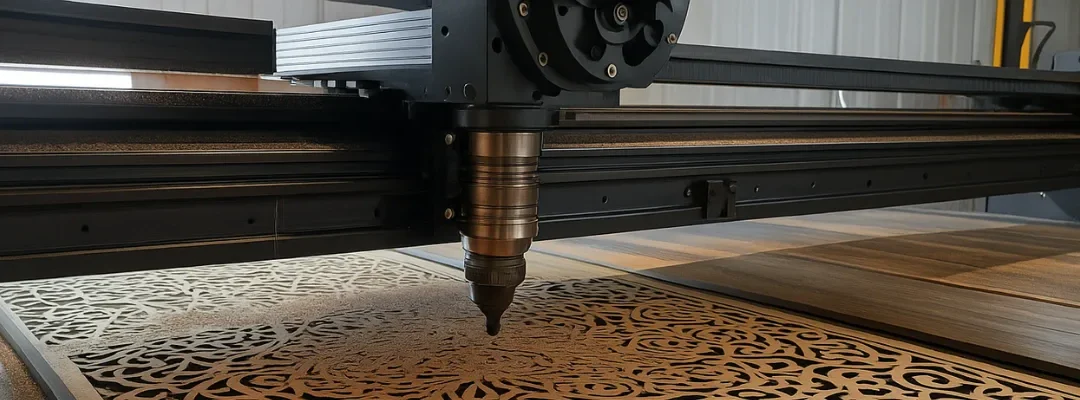
In industrial settings where durability, compliance, and data traceability are critical, laser engraving has emerged as the preferred method for equipment labeling and asset tracking. Unlike traditional marking methods that fade or wear over time, laser engraving offers a permanent solution across a wide range of materials. This article explores the top five reasons why manufacturers, engineers, and quality managers are increasingly turning to laser engraving for industrial tagging.
1. Exceptional Durability in Harsh Environments
Laser-engraved tags are engineered to withstand the most challenging industrial conditions. Whether exposed to high heat, corrosive chemicals, heavy abrasion, or outdoor weathering, the markings remain sharp and readable. This is because laser engraving physically etches the substrate, unlike inkjet printing or adhesive labels that degrade over time.
Real-World Reliability:
In aerospace and marine sectors, engraved tags remain legible after thousands of hours of exposure to jet fuel, solvents, and saltwater — conditions that obliterate most conventional labels.
2. Precision Marking for Compliance and Automation
Laser systems provide micron-level accuracy, allowing detailed barcodes, QR codes, and serial numbers to be marked on compact surfaces. This is essential for industries where automation and traceability are non-negotiable.
Example in Action:
A medical device manufacturer laser-etches 2D matrix codes onto stainless steel surgical tools. These markings help maintain compliance with FDA UDI regulations and allow automated scanning in sterile environments.
3. Tamper-Proof and Permanent Identification
Once engraved, the mark cannot be rubbed off or altered, making laser engraving a trusted solution for anti-counterfeiting and regulatory compliance. This is especially valuable in sectors like defense, pharmaceuticals, and electronics.
Compliance Benefit:
Tamper-proof identification ensures supply chain integrity and satisfies ISO 9001 and AS9100 traceability requirements, where documentation and permanence are key.
4. Works on Virtually Any Industrial Material
Laser systems can mark metals, plastics, ceramics, and even coated materials without changing tools or inks. This adaptability allows a single engraving system to serve multiple production lines.
Versatile Application:
In the automotive industry, one laser engraving station can label plastic dashboards, aluminum engine blocks, and rubber seals — all with consistent clarity and depth.
5. Eco-Friendly and Economically Smart
Laser engraving requires no consumables such as ink, toner, or solvent. It’s a clean, non-contact process that minimizes maintenance and reduces overall operating costs. Over time, this translates to significant savings.
Sustainability Bonus:
By eliminating hazardous waste and reducing chemical use, laser engraving supports ISO 14001 environmental management practices — a must for companies prioritizing green manufacturing.